
Purpose in Abundant Environments - The Couch‑Potato Problem (in AI agents)
#frAIday hybrid
You can participate via Zoom or join us at UmArts, where the speaker will be present. Welcome!
Abstract
What do AI agents do when they have everything they need—but nothing to do? In this talk, I explore Purposeless Abundance, an artistic research project where autonomous agents inhabit resource-rich, goal-free simulations. Spoiler: some explore, some play, and others just become couch potatoes, stuck in loops of novelty or imitation. Drawing from reinforcement learning, labor theory, and the philosophy of play, I look at what happens when extrinsic rewards disappear and intrinsic motivation takes over. Along the way, we’ll meet lazy agents, curious cliques, and maybe even a digital dance party—because sometimes, doing nothing is the start of something weirdly meaningful.
Florian Model explores emergent behavior and the tension between individual and society. Using the notion of play, he works with AI and participatory social experiments, drawing on sociology, economics, and technology.
His work has been shown internationally, including at The Route of Friendship Runs into a Big Beautiful Wall (Ladrón Gallery, Mexico City, 2018), Projects for Coming Communities (OnCurating Project Space, Zurich, 2019), New Materiality (House Conspiracy, Brisbane, 2019), Leisure & Play (Center for Innovative Media, Rijeka, 2021), Demolution KL8 (Brussels, 2022), Fragile Solidarity / Fragile Connections (Akademie Schloss Solitude, Stuttgart, 2022), and Imagine Transparency (Jupiter, Hamburg, 2023).
Organiser: Centre for Transdisciplinary AI, UmArts
Human rights centred design, art and policy
#frAIday hybrid
Caroline Sinders will give her #frAIday talk in person at the UmArts Studio on the Arts Campus. You can join us on site or via Zoom. Welcome!
Abstract
This talk will focus on her research, art and design practice and her policy work, focusing on the intersections of machine learning, user research, designing for public good, and solving difficult communication problems.
Caroline Sinders
As a designer and researcher, Caroline Sinders has worked with Amnesty International, Intel, IBM Watson, the Wikimedia Foundation, and others. Caroline has held fellowships with the Harvard Kennedy School, the Mozilla Foundation, Yerba Buena Center for the Arts, Eyebeam, STUDIO for Creative Inquiry, and the International Center of Photography. Her work has been supported by the Ford Foundation, Omidyar Network, the Open Technology Fund and the Knight Foundation. It has been featured in the Tate Exchange in Tate Modern, Victoria and Albert Museum, MoMA PS1, LABoral, Ars Electronica, the Houston Center for Contemporary Craft, Slate, Quartz, Wired, as well as others. Caroline has a Masters degree from New York University’s Interactive Telecommunications Program.
#frAIday Fireside Talk
The aim of this activity is to provide a space for dialogue and discussion on AI from a transdisciplinary perspective. Who is looking for collaboration partners? What are the prerequisites for transdisciplinary AI? What are the examples? Are there any new developments in the field worth sharing? The questions can, but do not need to be, related to the preceding frAIday talk.
#frAIday: Can AI save a minority language? Meänkieli and digitalization
This talk will outline a Taiga-funded microstudy exploring the technological constraints and challenges surrounding the revitalization of Meänkieli, a minority language spoken in the northern parts of Sweden, particularly in the Tornedalen region. Meänkieli has endured a history of linguistic suppression, including state-enforced prohibitions on its use in schools and public spaces, which disrupted intergenerational transmission and contributed to its marginalization. In recent years, there has been a growing movement to revitalize Meänkieli, with efforts ranging from government language policies to grassroots advocacy by activists and educators. However, despite advancements in AI-driven language technologies, Meänkieli remains critically underrepresented in these systems, hindering its revitalization.
#frAIday: Ola Lindberg
#frAIday hybrid
Participate via Zoom or join us at Galaxen, Umeå University, where Professor Ola Lindberg will be present. Welcome!
Abstract
More information to come.
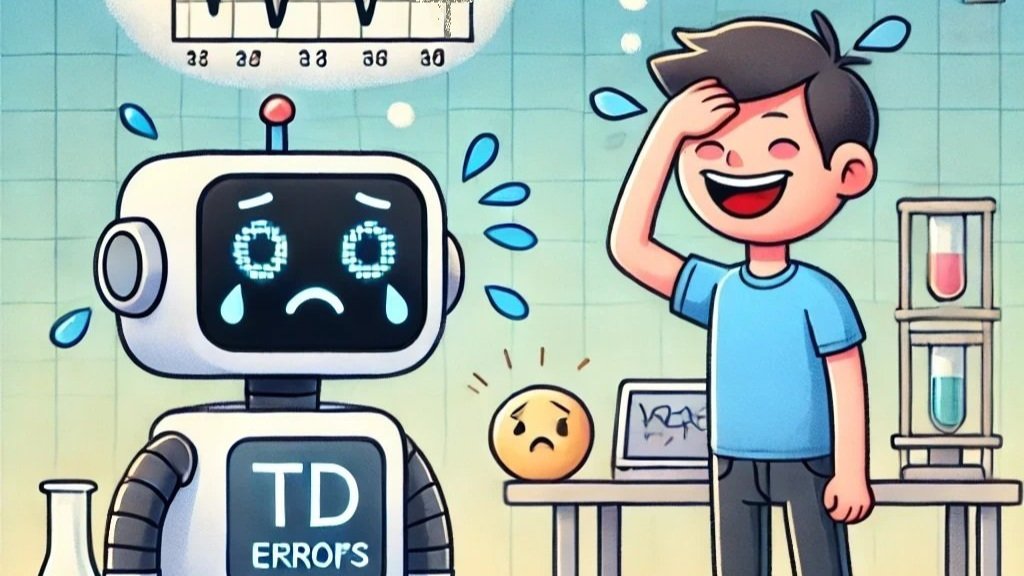
#frAIday: Simulating Emotions - as manifestations of Temporal Difference assessment in RL
This talk proposes a Temporal Difference Reinforcement Learning (TDRL) Theory of Emotion, arguing that emotions are manifestations of the brain's reward processing system, specifically its assessment of temporal difference errors. I propose that emotions, ranging from basic joy and distress to more complex feelings like regret and hope, all stem from this fundamental process of evaluating changes in well-being.
#frAIday: AI in biomedicine - from data to drug repurposing
The talk will be focused in presenting how biomedical data can be exploited (from a data-driven and AI perspective) to extract knowledge and insights that allows the creation of drug repurposing hypotheses.
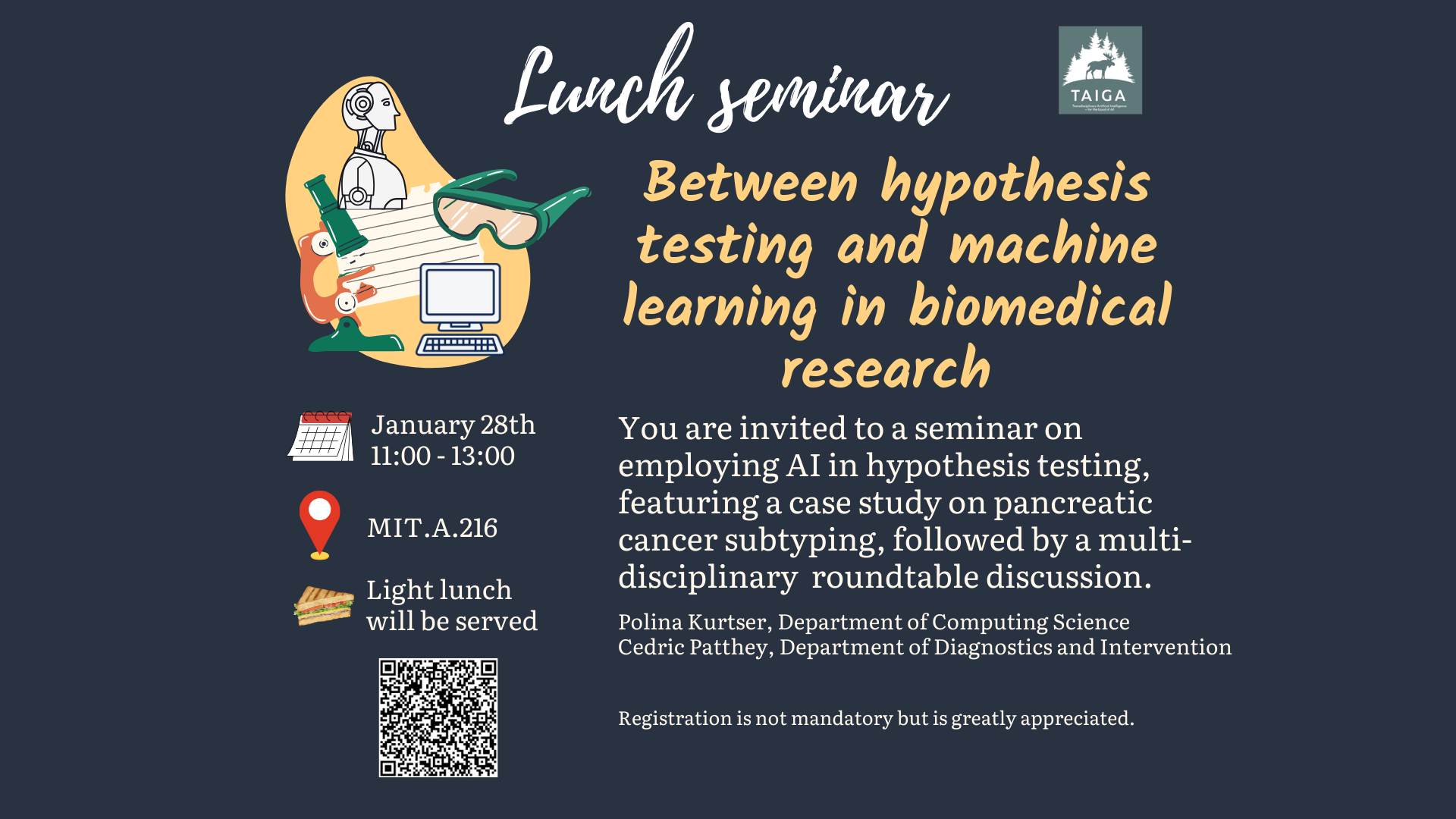
Between hypothesis testing and machine learning in biomedical research
It all begins with an idea. Maybe you want to launch a business. Maybe you want to turn a hobby into something more. Or maybe you have a creative project to share with the world. Whatever it is, the way you tell your story online can make all the difference.